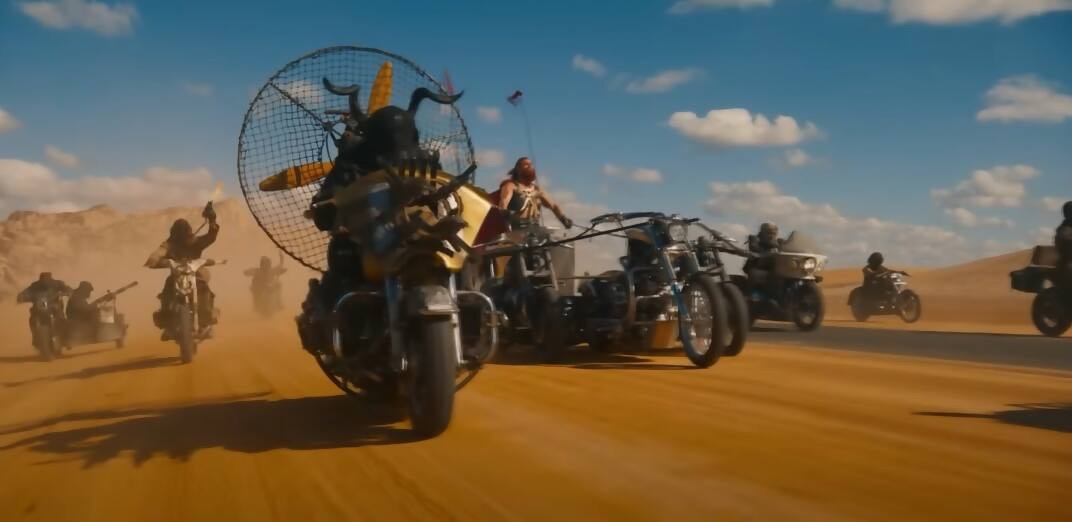

Last night I watched „Furiosa: A Mad Max Saga“ – and I was overwhelmed (…until now I haven’t seen George Miller‘s latest part of the Mad-Max-Series, „Fury Road“).
Today, I read James Harvey’s movie review about „Furiosa“. He says: „The series’ true strength has always been Miller’s ability to hew a narrative out of this apparent chaos, and like Fury Road before it, Furiosa drips confidence at every turn of the wheel.“ – and he is absolutely right! Sitting in the dark of the cinema and watching this blaze of desert colours, fossil cars and hopeless carnage, I could physically feel that effect of cinema that Walter Benjamin had described hundred years ago: Movies are the „training camps for modern life“. According to Benjamin, movies – as a then new medium – prepared people and trained their perception for the speed, complexity, chaos and content of life in modern times that were setting in at that time during the roaring twenties. In this spirit, „Furiosa“ trains and prepares us – living in the Twenties 100 years later – for our new lives in new times that could possibly set in. „Furiosa“ acts as a training camp for a future that is quite nearer now as a plausible scenario (now legitimised by scientific evidence of climate crisis) than it had been when the first Mad Max movie was released in 1979.
As James Harvey states in his movie review, George Miller “hew[s] a narrative out of this apparent chaos” (Harvey, 2024) – and boy, he really does! He does this so good and on so many levels and with such convincing visual storytelling and beat by beat, that even the cruelest action scene lets bloom poetic metaphors: the star map of hope, engraved in the human flesh will be literally fleshly erasured by machine contact causing physical pain that psychologically erases hope by the birth of hate. I have seldom seen an action movie in which almost every action was so meaningful on so many levels.
In post-apocalyptic, dystopian narratives like „Furiosa“ we keep on telling ourselves the same story of our western 20th.-century-civilisation and its inescapable development and ending over and over again: There is GASTOWN, there is BULLET FARM, there is the CITADEL and there are the productive and destructive/toxic relations between them. Miller’s desert-world becomes the minimap of our global industrial civilization, his Saga condenses the architectural pattern of our 20th.-century-civilisation to its geopolitical, socioeconomic and climatic (mad) MAX. Miller’s controlling idea of his story is the architectural pattern of our 20th.-century-civilisation: The unnatural rush for abundance pushed by power and progress will lead to scarcity, shortage and “half lives” in the end. And we people of the modern age, in the dark of the cinema hall recognise this core of truth about our modern lives, the foundation of our existence and our looming future as 20th.-century-boys‘n‘girls who just did not manage or care to become sustainable 21st.-century-boys‘n‘girls.
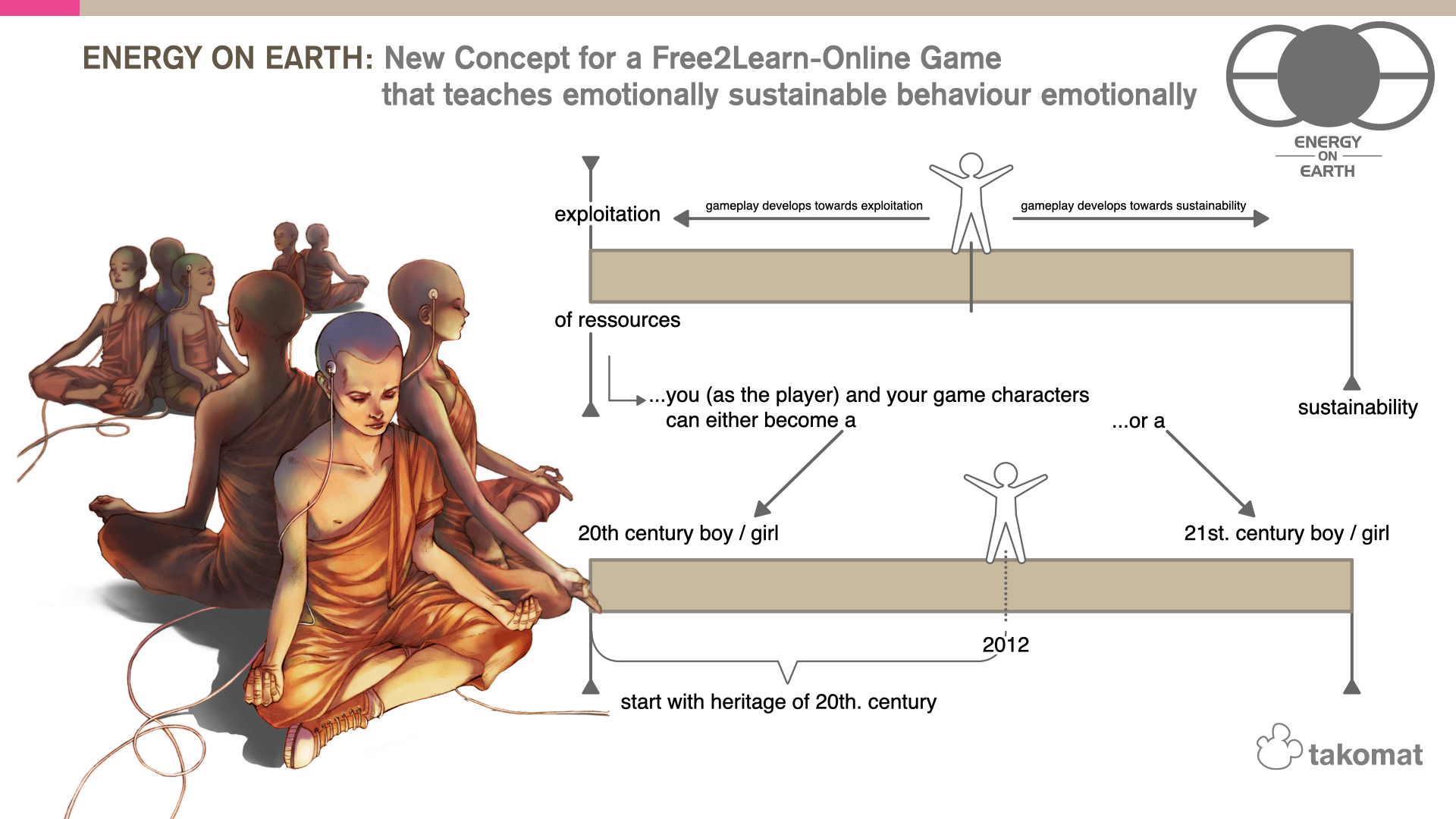
Leaving the cinema after watching those post-apocalyptic people in „Furiosa“ you cannot but start to think over the scenario laid out in the movie. And you realize that you can‘t escape this architectural pattern which is hard-wired in our modern minds: Of course you would need cars, guns and technical progress in such a hostile world to survive! That’s why so often walking or running by foot in the movie is compared with and outgunned by driving with a machine. Of course they sacrifice mothermilk, vegetables and blood for a well-buttered and fully-fueled V8-engine! Of course they religiously worship it, because it is mighty and it gives powerful advantages! How would another world even be possible?! At least Furiosa sows a hint at the end of the movie after Garden Eden had been left behind at the beginning…
When Turner’s painting “Rain, steam and speed” can be seen as the opening vernissage for the dawn of modern age and industrial civilisation with all of its hope and confidence, then Miller’s cinematic painting “Heat, smoke and fury” exactly 180 years later acts as the finissage for the dusk of modern age and industrial civilisation with all of its looming destruction and despair.

 Welcome to the Reset of the Real
One reply on “Futura Furiosa”
Love how you sneaked that Walter Benjamin quote in 😀 , looking forward to watching Furiosa soon!
LikeLike